This page has been archived.
14 September 2023
The organisers of the Cambridge Morphogenesis Seminar Series are pleased to announce The First Cambridge Morphogenesis Symposium, which will take place on the 11 September 2023 at the Sainsbury Laboratory Auditorium, Cambridge CB2 1LR.
All talks will also be streamed online for virtual participants.
You will hear about the fascinating research conducted by fellow morphogenesis enthusiasts across institutes and university departments here in Cambridge, presented in the form of a short talk or poster.
Refreshments will be provided throughout the day and the Symposium will finish off with a pub social. This Symposium offers a great opportunity to network with likeminded scientists and to discuss your own science with your peers!
Important Dates // Invited Speakers //
Registration // Schedule
Accessibility Information // Contact Information
Important Dates:
| Extended deadline for abstract submission | 24 July 2023 |
| Deadline for in-person ticket registration | 29 August 2023 |
| Deadline for online ticket registration | 11 September 2023 |
Invited Speakers:
Join us for an exciting plenary talk from Professor Paola Oliveri (UCL) on
‘The Genomic Control of Development’.
Professor Paola Oliveri
Group leader at University College London, London
The Oliveri group aims to decipher gene regulatory networks (GRN) in development and regeneration of living systems, using echinoderms as a model. Echinoderms consist of five big classes, each with distinct larval stages of which only the echinoids and ophiuroids form a larval skeleton. The formation of a larval skeleton has the best-described developmental GRN for the sea urchin, Strongyloncentrotus purpuratus. The Oliveri group performs comparative analysis between echinoderm classes to better understand the developmental evolution of animal body plans, which resulted in the vast diversity of animal morphologies seen on the planet today.
@oliverilab on Twitter

We will also hear from three invited speakers working within Cambridge: Dr Edwige Moyroud (Sainsbury Laboratory), Dr Golnar Kolahgar(PDN), and Dr Adrien Hallou (Gurdon Institute).
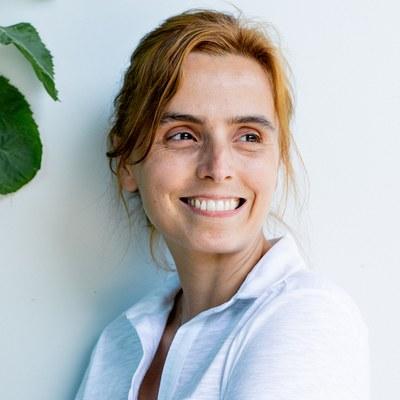
Dr Edwige Moyroud
Group leader at Sainsbury Laboratory, Cambridge
Plants produce complex and diverse forms by controlling cell behaviour with exquisite spatiotemporal resolution. The colourful patterns on the petals of flowering plants represent striking illustrations of their engineering skills. These patterns are often highly elaborated, combining chemical (pigments) and structural (cell shape and texture) features to generate neighbouring tissues with contrasting appearances. Petal patterns also fulfil important functions, ranging from protection against UV radiation and desiccation to communication with pollinators. However, the mechanisms that program cell behaviour in a coordinated fashion across the epidermis of developing petals are not well understood. Our group investigates the formation and evolution of petal patterns across a small group of Hibiscus species. Combining genetic and phylogenomic approaches with imaging, modelling and behavioural experiments in a novel model system helps us understand how plants can set-up boundaries within the petal epidermis and how evolutionary tinkering generates the diversity of patterns observed in nature.
@Edwige_M on Twitter
Dr Golnar Kolahgar
Group leader at PDN, Cambridge
The Kolahgar group focuses on discovering extracellular molecules that instruct cells to proliferate in the gut, using the fruit fly Drosophila melanogaster as a model system. The intestinal epithelium constantly regenerates from stem cells, which adjust their behaviour to the changing physiological conditions the gut is exposed to. The molecular mechanisms of gut maintenance and tissue differentiation largely resemble those used during development; for example, the same signalling pathways that control tissue growth during development control cell fate decisions in the adult or become misregulated in cancer. The Kolahgar group aims to identify the secreted and physical factors that regulate gut plasticity, and to investigate the crosstalk between the visceral mesoderm and the intestinal epithelium.
@golikolahgar on Twitter

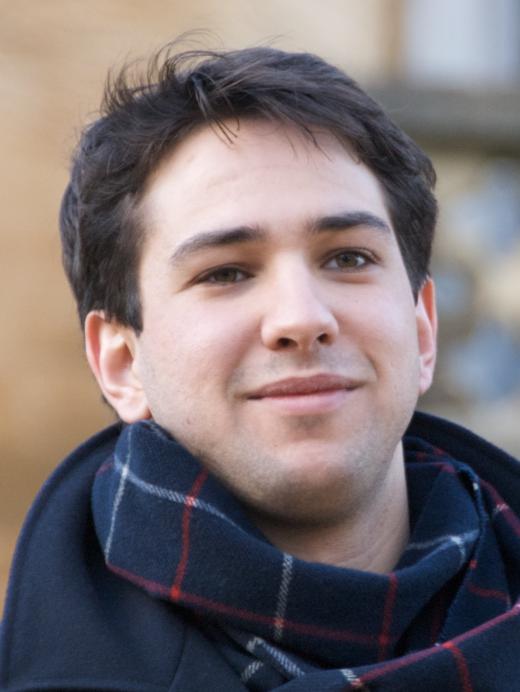
Dr Adrien Hallou
Herchel Smith Postdoctoral Research Fellow in the group of Professor Benjamin Simons at Gurdon Institute, Cambridge
Cell morphology, mechanical forces, and gene expression act together to orchestrate cell fate decisions and tissue morphogenesis during embryonic development. However, understanding quantitatively the complex interplay between these different determinants of embryogenesis still remains elusive. We present a first computational framework for the joint statistical analysis of transcriptomic and mechanical signals in a spatial transcriptomics context. Using E8.5 mouse embryo seqFISH data sets, we infer mechanical forces, using image-based variational force inference, and identify mechanical and gene expression signatures which are predictive of tissue compartment boundaries. We find that spatial boundaries defined on the basis of gene expression are correlated with mechanical profiles which justify their maintenance and formation. Using generalized structural equation modelling we then identify gene modules predictive of mechanical behaviors of cells in an unbiased manner.
Registration:
Registration for in-person tickets closes on 29 August 2023, while online tickets will be available up until the day of the Symposium.
If you sign up to attend virtually, please note that this is a personal zoom link, which should not be shared online.
Schedule:
| 09:00-09:30 | Registration & Poster Set-up |
| Morning Session I | 09:30-10:30 |
| 09:30 | Welcome |
| 09:35 | Dr Edwige Moyroud on ‘Petal patterning: understanding how flowers shape their surface’ |
| 09:55 | Dr Hanna Häkkinen on ‘E-cadherin required for efficient epithelial phagocytic clearance in early embryo’ |
| 10:15 | Dr Iskra Yanakieva on ‘Stochastic dynamics and biomechanical regulation of cell shape change during epithelial-to-mesenchymal transition’ |
| Coffee Break | 10:35-11:00 |
| Morning Session II | 11:00-12:00 |
| 11:00 | Dr Adrien Hallou on ‘Spatial mechano-transcriptomics of the early mouse embryo’ |
| 11:20 | Dr Guillermo Serrano Nájera on ‘How to turn a 🐔 into a 🐸? Generation of alternative gastrulation modes in the chick embryo reveals new evolutionary constraints’ |
| 11:35 | Speed poster session |
| Aromi Pizza Lunch | 12:00-13:00 |
| Poster Session | 13:00-14:00 |
| Plenary Talk | 14:00-14:45 |
| 14:00 | Professor Paola Oliveri on ‘The Genomic Control of Development’ |
| Coffee Break | 14:45-15:15 |
| Afternoon Session | 15:15-16:15 |
| 15:15 | Scott Wilson on ‘Freak neurons: developmental errors and connectomic variation within an insect brain’ |
| 15:35 | Dr Argyris Zardilis on ‘Influences of a microtubule mediated mechanical feedback during early stages of flower development’ |
| 15:55 | Dr Golnar Kolahgar on ‘Mechanotransduction in the stem cell niche’ |
| Closing Remarks and Poster Prizes | 16:15-16:45 |
| Snacks and Drinks | 16:45-18:00 |
| Pub Social | 18:00 onwards |
Accessibility information:
The Sainsbury Laboratory has step-free access to the building and to all Symposium spaces (fully wheelchair-accessible), gender-neutral toilets,
accessible gender-neutral self-contained toilets, a quiet room, a family room,
and a lactation room.
Contact Information:
Feel free to contact us at ucam-morphogenesis-committee@lists.cam.ac.uk if you have any questions.
We look forward to seeing you there!
From the Cambridge Morphogenesis Seminar Series organising committee
Margherita Battistara
Jia Chen
Katie Goodwin
Jenny Kretzschmar
Rachel Mckeown
Susie McLaren
Wolfram Pönisch
Sarah Robinson
Elena Scarpa
Jana Sipkova
Euan Smithers
Alice Yuen


Cambridge Centre for Physical Biology

Research Themes (School of Biological Sciences)
 UCAM Morphogenesis Series